Pool Deck Coating Maintenance for HOA and Apartment Communities
Summer is here! Don’t let Pool Deck Problems Turn Into Resident Complaints
A community pool deck rarely fails all at once. The damage shows up in pieces: hairline cracks spreading from expansion joints, faded coating around the waterline, slick spots where the texture has worn smooth, and coping stones that shift underfoot. For most of the year, residents walk past these problems without a second look.
Then summer arrives. The pool opens, traffic multiplies, and every flaw in the deck becomes a complaint in your management inbox. Bare feet find every rough patch. Parents notice the loose coping near the steps. Someone slips on a worn section after a rainstorm, and suddenly the board is discussing liability instead of barbecues.
If your HOA or apartment community has a pool deck that has gone several seasons without attention, you are not alone.
Pool deck maintenance is one of the most commonly deferred line items in community budgets, partly because the deck looks passable right up until it does not. The good news is that a well-timed
pool deck coating service is far less expensive than the structural repairs that follow years of neglect. The key is understanding the maintenance cycle and getting ahead of it.
How Often Should an HOA Recoat Its Pool Deck?
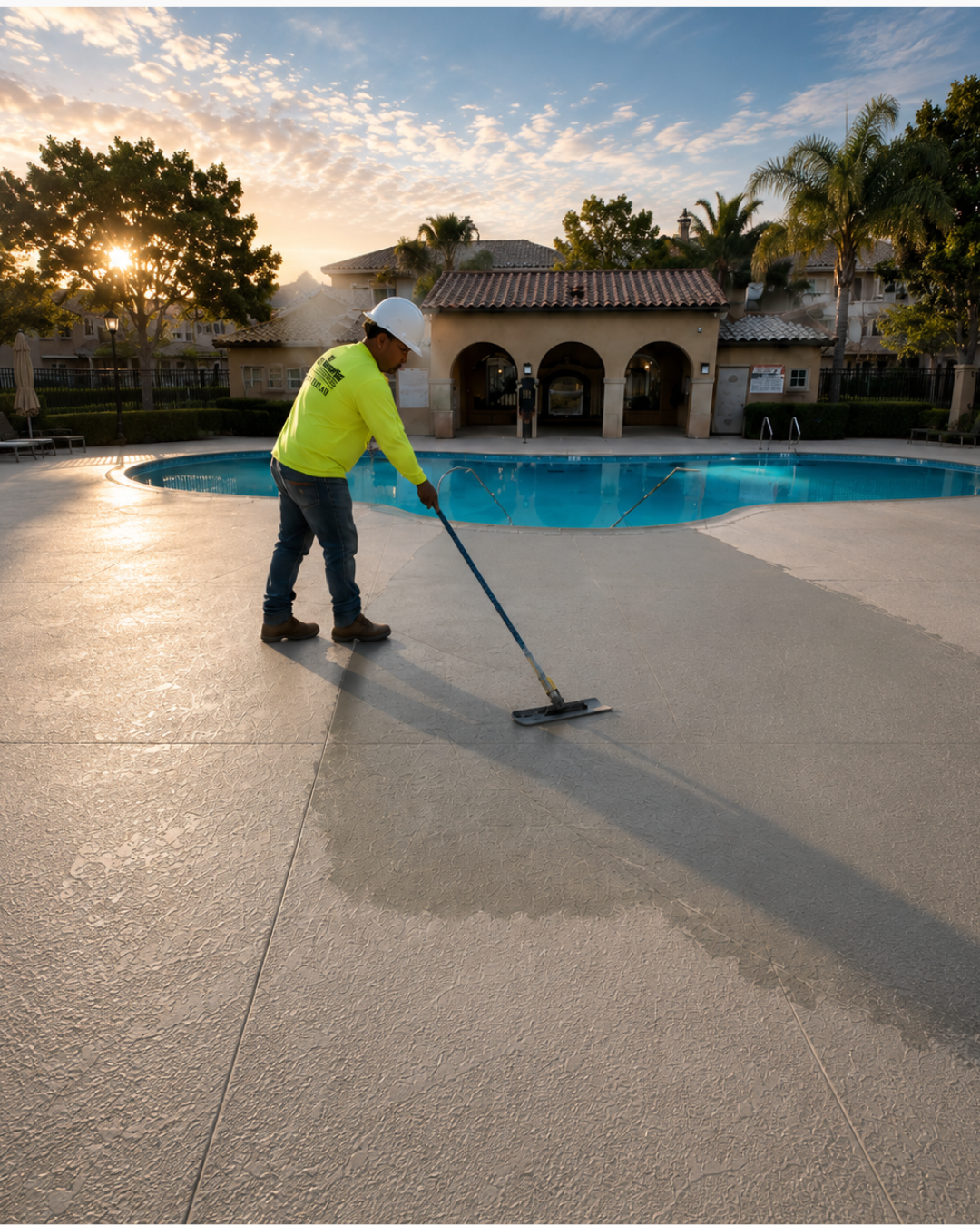
EmpireWorks recommends maintaining the top coat on your pool deck every three to five years. It reflects how long a quality deck coating system can stand up to sun exposure, pool chemicals, and constant foot traffic before its protective properties start to break down.
The top coat is the sacrificial layer of your pool deck coating system. It absorbs UV damage, resists chlorinated splash-out, and keeps the waterproofing layers beneath it sealed. Most importantly, a sound top coat keeps your expansion joints and seams properly sealed. Once that layer wears thin, water begins finding its way into the joints and under the coating. From there, problems compound quickly: delamination, spalling concrete, corroded reinforcement, and moisture intrusion into structures below elevated decks.
Communities that recoat on a three-to five-year cycle almost never face those compounding failures. Meanwhile, communities that stretch the cycle to eight or ten years usually end up paying for substrate repairs, joint reconstruction, and in severe cases full deck replacement. The math consistently favors the maintenance cycle and a scheduled recoat is a predictable, budgetable expense.
If you cannot remember the last time your pool deck coating was serviced, that is usually the answer. A deck that has gone five or more years without a recoat is due for a professional evaluation at minimum.
Repair Small Cracks Before the Final Coat, Not After
One of the most common mistakes we see in community pool deck maintenance is coating over existing damage. A fresh top coat applied over unrepaired cracks looks great for a season, then the cracks telegraph right back through the new surface. The coating did its job. But the substrate underneath it did not get the attention it needed.
It is important to remember that the correct sequence matters. Small cracks, minor surface defects, and failing joint sealant should all be addressed before the final application goes down.
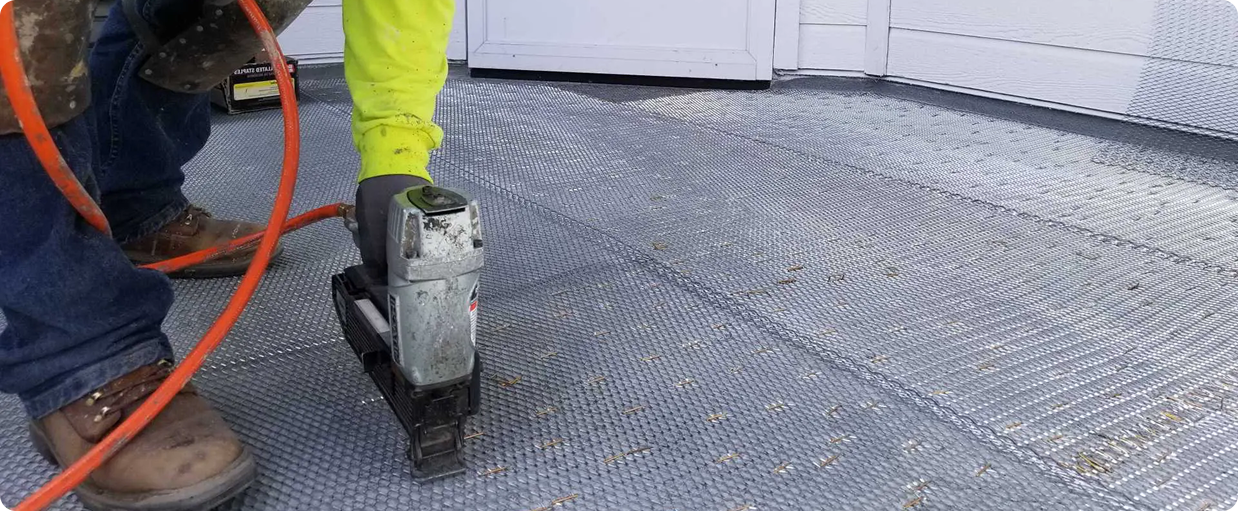
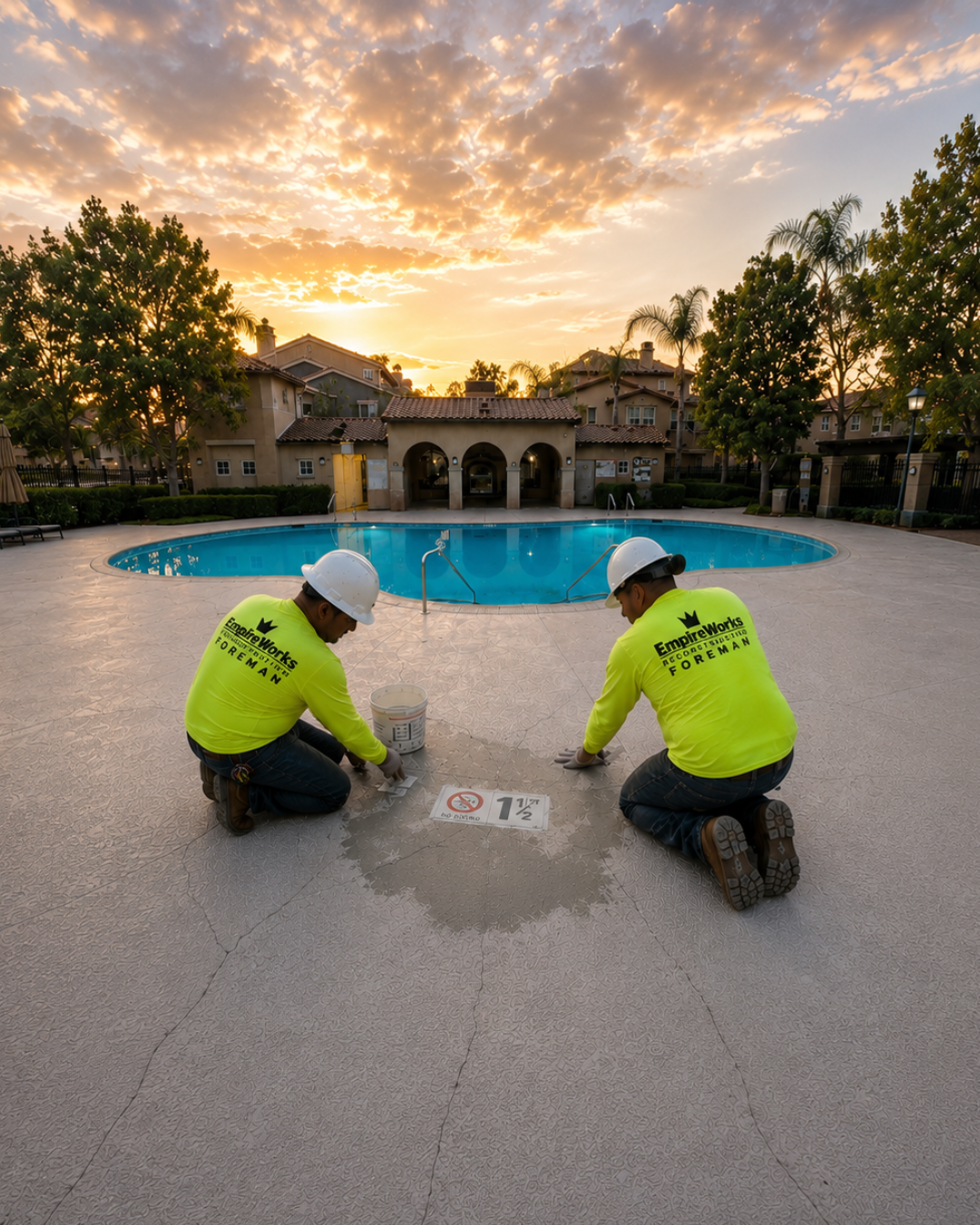
At EmpireWorks, crack repair and surface preparation are built into our pool deck coating process, not treated as change orders discovered halfway through the job. Hairline cracks get routed and filled. Failed sealant gets removed and replaced. Spalled or delaminated sections get patched and profiled so the new coating bonds correctly.
This repairs-first approach is what separates a coating that lasts its full service life from one that fails early. Water is patient. Any crack left under the new surface becomes a pathway for moisture, and moisture under a coating eventually lifts it. Handling minor pool deck repairs during the recoat cycle costs a fraction of what it costs to address them after they have spread.
Coping Repairs and Pool Fencing: The Rest of the Pool Area
Your pool deck does not end at the coating. Two other components show up constantly in resident complaints and inspection reports, and EmpireWorks services both.
Pool coping
The coping is the cap that borders the pool edge, and it takes more abuse than any other surface in the pool area. Swimmers grip it, sit on it, and push off from it all season. Loose, cracked, or shifting coping stones are both a safety hazard and a water intrusion point at the most vulnerable seam in the entire pool structure. Coping repairs are best handled during the same mobilization as your deck coating work, when the area is already closed and crews are already on site.
Pool fencing
Pool enclosures are a code compliance item, not just an aesthetic one. Leaning posts, corroded panels, sagging gates, and self-closing hardware that no longer self-closes can all put a community out of compliance with local barrier requirements. We repair and replace pool fencing as part of a complete pool area service, so your community is not coordinating three separate vendors for one amenity space.
Bundling coping and fencing work with your deck coating cycle means one closure, one mobilization, and one project for your manager to communicate to residents instead of three.
What a Professional Pool Deck Evaluation Should Include
Be cautious with any contractor who prices a community pool deck project from a phone call or a five-minute walkthrough. A pool deck serving an HOA or apartment community is a shared surface, a liability zone, and a visible amenity all at once, and pricing it accurately requires actually assessing it.
When EmpireWorks evaluates a community pool deck, we provide a full recap of the necessary work before anything is scheduled. That evaluation covers the condition of the existing coating, the state of expansion joints and sealant, crack mapping, coping integrity, drainage performance, and the condition of fencing and gates.
You receive a clear scope: what needs repair now, what should be addressed at the next cycle, and what can simply be monitored.
We also advise on the best products for your specific deck. Not every coating system is right for every community. Elevated decks over occupied space have different waterproofing requirements than slab-on-grade decks. High-traffic resort-style amenity areas need different texture and wear specifications than a quiet community pool. Sun exposure, climate, and the existing coating system all factor into the recommendation. Our job is to match the product to the conditions so the board is buying performance, not just a color refresh.
That recap becomes a planning document your board and manager can actually use, whether you proceed this season or budget the work for next year.
Budgeting Pool Deck Maintenance Into Your Reserve Study
Most reserve studies account for major pool components like replastering and equipment replacement, but pool deck coating maintenance is frequently underfunded or missing entirely. That gap is why so many communities end up treating a routine recoat like an unplanned special expense.
The three to five year top coat cycle makes this easy to fix. Because the interval is predictable, your reserve study can carry pool deck coating as a recurring line item with a known useful life, the same way it carries roofing or exterior painting. Boards that fund the deck cycle proactively avoid the two worst outcomes: deferring the work until substrate damage multiplies the cost, or scrambling to approve emergency funding while the pool sits closed in July.
If your community is updating its reserve study, a current pool deck evaluation gives your reserve analyst real data to work with: actual coating condition, remaining service life, and realistic replacement costs rather than generic estimates.
Schedule Your Community's Pool Deck Service Before Peak Season
Every summer, communities that waited too long compete for the same contractor calendars while their residents wait for the pool to open. The communities that get ahead of it schedule their evaluations in spring, complete repairs and recoating on their own timeline, and open the season with a deck that generates compliments instead of complaints.
If your HOA or apartment community's pool deck is overdue, EmpireWorks can help. We have served community associations for decades with deck coating,
deck repair, coping repair, and pool fencing, and we understand what multi-unit projects require: clear resident communication, phased scheduling that preserves access where possible, and realistic timelines that hold.
Contact EmpireWorks today to schedule a pool deck evaluation. We will inspect your pool area, document its condition, and deliver a complete recap of the recommended work and products. Let the board make an informed decision before the busy season makes it for you.