All In Together: How EmpireWorks Approaches Construction Safety Week 2026
Construction Safety Week, held every May, is an industry-wide call to action reminding every person who builds, restores, and protects properties that a safe worksite is everyone's responsibility. This year's theme, All In Together, reflects something EmpireWorks has built its entire safety culture around: safety does not belong to one person, one role, or one department. Every crew member, supervisor, subcontractor, and leader who steps onto a jobsite carries a share of it.
Across our locations in California, Nevada, Arizona, Texas, Colorado, New Mexico, Utah, and Florida, EmpireWorks operates under one standard: every worker deserves to return home safely at the end of the day. That standard does not waver based on project size, timeline pressure, or how far down the schedule a crew is running. Safety is the foundation of everything we do, not a variable we weigh against productivity.
This Construction Safety Week, we are going deeper than hard hats and high-visibility vests. We are talking about the hazards that demand the most respect, the frameworks that keep crews alert, and the conversations that too many jobsites still avoid.
All In Together is an operational reality on an active construction or reconstruction site. A crew member who skips a pre-task hazard check can affect everyone working around them. A supervisor who lets a shortcut slide sends a message that shortcuts are acceptable. Or a worker who notices something wrong but stays quiet puts the whole crew at risk. Shared accountability is not a soft concept here; it shows up in daily decisions that determine whether everyone goes home.
At EmpireWorks, that accountability is built into how we train, inspect, and communicate across every division. Our military-inspired approach to safety brings structure and discipline to jobsite culture, where readiness is a standard expectation, and every team member understands their role in protecting the person next to them.
Data from the U.S. Bureau of Labor Statistics consistently shows that construction remains one of the most hazardous industries in the country. According to CPWR, The Center for Construction Research and Training, construction workers account for roughly 20% of all worker fatalities in the United States despite representing a far smaller share of the total workforce. Those numbers are not inevitable. They come down when every person on the site is genuinely all in.
High-Energy Hazard Management and the STCKY Framework
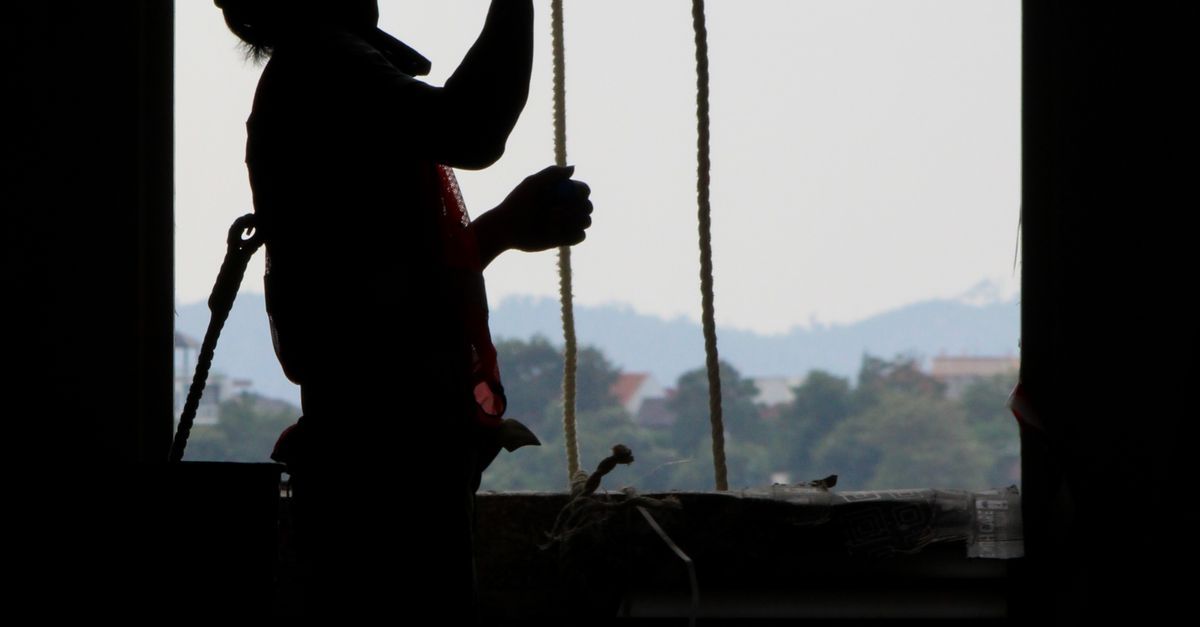
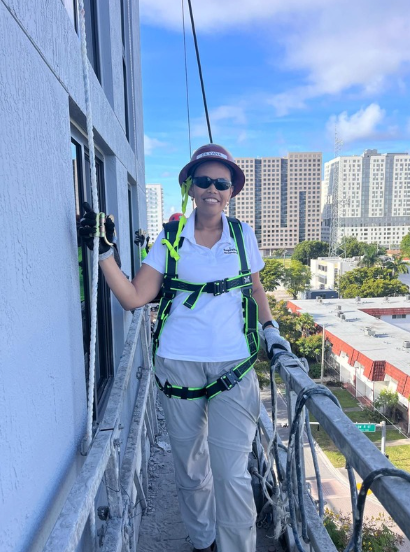
High-energy hazards are the conditions on a jobsite with the greatest potential to cause serious injury or death. Falls from height, struck-by incidents, electrical contact, caught-in/between events: these are the Focus Four hazards that OSHA has identified as responsible for the majority of construction fatalities, and managing them takes more than awareness. It requires a disciplined, repeatable system that crews can apply consistently under the pressures of a real workday.
One framework gaining traction across the industry for high-energy hazard management is STCKY: Stop, Think, Control, Know Your Surroundings. It is a pre-task mental check designed to interrupt automatic behavior before a crew member moves into a high-risk situation, giving them a moment to assess what they are walking into before momentum takes over.
- Stop: Pause before beginning any new task or re-entering a work zone. Rushing is where incidents begin, and a few seconds of stillness can change the outcome of a shift.
- Think: Identify the energy sources present. Gravity, electricity, stored pressure, moving equipment. Ask yourself what can cause harm before the task begins.
- Control: Apply the right controls before work starts. Fall arrest systems, lockout/tagout, PPE, barriers. Controls retrofitted after the fact are controls that failed.
- Know Your Surroundings:
Look up, look around, look below. Other crews, overhead lines, equipment movement, and edge proximity all factor in. A hazard you have not seen is still a hazard.
EmpireWorks embeds this kind of pre-task thinking into our daily
Job Hazard Analysis (JHA) process. Before any high-energy task begins, whether that is rooftop work, scaffold erection, MEWP operation, or work adjacent to live electrical systems, our crews stop, evaluate, and confirm controls are in place. That is a non-negotiable requirement on every EmpireWorks site.
High-energy hazard management programs are most effective when workers are engaged directly through active pre-task conversations rather than relying on posted policies alone. STCKY delivers results when it becomes a crew habit, woven into the start of every task rather than reserved for formal safety reviews.
Construction Safety Week 2026 organizes the All In Together theme around three core pillars: practical behaviors that every person on a jobsite can apply, regardless of their role or tenure.
Recognition starts with situational awareness, because a hazard you have not identified is one you cannot control. On an EmpireWorks jobsite, recognition is built into every stage of the day, from the morning safety briefing to mid-task check-ins to end-of-shift walkthroughs. It is an ongoing process and not a one-time observation.
Recognition also applies to the people around you. Noticing that a coworker seems fatigued, distracted, or overwhelmed carries the same weight as spotting a slip hazard on a walkway. Fatigue-related incidents are a documented and preventable risk in construction. When you see something, say something. That is what being all in looks like in practice.
Recognizing a hazard only creates value when someone acts on it. EmpireWorks maintains rapid-response and documentation protocols that make incident response fast, thorough, and legally defensible, including same-day reporting, immediate investigation, and photo documentation as standard practice across all sites.
Responding also means having the confidence to stop work when something is not right. Every EmpireWorks crew member has both the authority and the responsibility to halt a task that looks unsafe. Stop-work authority at EmpireWorks does not require layers of approval. If you see it, stop it, and report it. Let the system work.
Respect in this context carries two dimensions. The first is respect for the hazards themselves. High-energy environments are unforgiving, and complacency, the feeling that you have done this a hundred times without incident, is one of the leading contributors to construction fatalities. Familiarity with a task does not reduce the consequence of skipping a control.
The second dimension is respect for the people you work alongside. A genuine safety culture means nobody is embarrassed for raising a concern, nobody is pressured to skip a step because the schedule is tight, and every crew member's wellbeing is treated as a shared priority. At EmpireWorks, that respect extends across language barriers, which is exactly why our bilingual training programs exist: safety cannot get lost in translation.
The Conversation We Cannot Skip: Mental Health on the Jobsite
Any honest conversation about All In Together has to include mental health. Construction has one of the highest suicide rates of any industry in the United States.
CPWR data indicates that construction workers die by suicide at a rate more than four times higher than the industry’s fatality rate from all other combined causes. Physical hazards get the training programs and inspection checklists. This one rarely does, and that gap costs lives.
The risk factors are real and embedded in the work itself: physical pain and injury, seasonal layoffs, job instability, long hours away from family, and a workplace culture that has historically treated asking for help as a weakness. Changing that culture is a safety initiative, and it starts with supervisors and crew members being willing to have a different kind of conversation.
"At EmpireWorks, safety is more than harnesses, hard hats, and procedures. It’s also checking on the person behind the vest. Mental health matters because strong crews are built through support, respect, and looking out for one another both on and off the job. A safer workplace starts with knowing no one fights their battles alone."
— Juan Puerto, Safety Director, EmpireWorks Reconstruction
Construction Safety Week 2026 and its partners at CPWR have resources specifically designed to help crews and supervisors open these conversations. The approach is straightforward: check in on your people, not just about the task they are running but about how they are actually doing. A genuine "are you okay?" is a safety intervention when it is asked with real intent and followed up on.
If you or someone on your crew is struggling, the 988 Suicide and Crisis Lifeline is available 24 hours a day, seven days a week by call or text. The Construction Industry Alliance for Suicide Prevention (CIASP) also offers industry-specific resources and supervisor training for those who want to be better equipped to support their teams.
At EmpireWorks, looking out for one another does not stop at the edge of a physical hazard. It extends to the person standing next to you, the one who seems quieter than usual this week, the one carrying something that nobody on site knows about yet. All in together means all of us, across every dimension of safety.
How EmpireWorks Lives This Year-Round
Construction Safety Week shines a light on what should be a 52-week commitment. At EmpireWorks, the practices that define our safety culture are not reserved for May. They are embedded in how we operate every day across every market we serve:
- Daily JHAs and toolbox talks that keep crews focused on the specific hazards present for each task, every day.
- Unannounced site inspections led by our safety leadership team, so that readiness is a daily standard, not a scheduled performance.
- Bilingual training programs in English and Spanish, because a crew member who cannot fully understand a safety protocol is a crew member at greater risk.
- OSHA 10-Hour and 30-Hour certifications maintained across our workforce, with specialized training for scaffold, MEWP operation, and CPR response.
- Subcontractor accountability standards that require every partner on an EmpireWorks project to meet our safety requirements, no exceptions.
- A communication-first culture where weekly calls, documented safety uploads, and Friday prep meetings keep every team aligned on priorities.
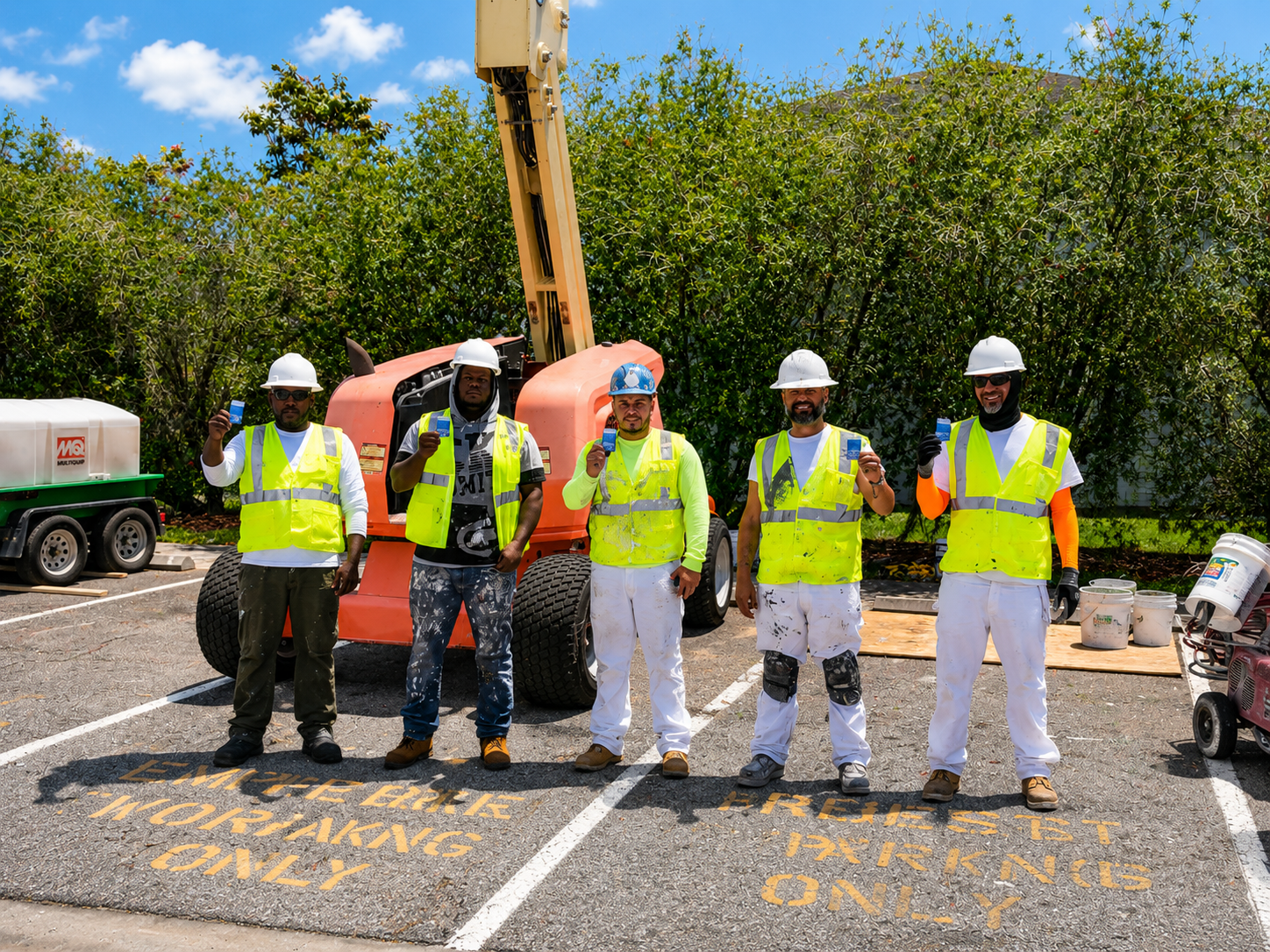
Construction Safety Week 2026 runs May 5 through 9. For every EmpireWorks crew member, supervisor, and subcontractor partner, here is what All In Together looks like in action this week and every week that follows:
- Run your STCKY check before every high-energy task and make it a genuine habit rather than a formality.
- Speak up when something looks wrong. Stop-work authority is real, and it exists to be used.
- Check in on your crew as people, not just as workers. Ask how they are doing and actually listen.
- Know the mental health resources available to your crew and share them without stigma or hesitation.
- Hold the standard for yourself and everyone around you. Safety culture is built one decision at a time, by real people on real jobsites.
The number that matters most in construction safety is straightforward: everyone goes home. EmpireWorks is building toward that outcome on every project, in every market, with every crew. And all in together means exactly that.
- Construction Safety Week 2026 — Official resources, toolbox talks, and campaign materials for the 2026 theme, All In Together.
- CPWR: The Center for Construction Research and Training — Data, research, and safety guides specific to the construction industry, including fatality statistics and hazard management resources.
- Construction Industry Alliance for Suicide Prevention (CIASP) — Industry-specific suicide prevention resources, supervisor training, and toolbox talk materials.
- 988 Suicide and Crisis Lifeline — Available 24/7 by call or text. Free, confidential support for anyone in crisis.
- EmpireWorks Safety — Learn more about EmpireWorks' safety standards, training programs, and commitment to protecting every crew member on every project.
Are you a property manager or owner looking for a safety-first reconstruction partner? EmpireWorks operates across eight states with a safety program that meets and exceeds OSHA standards at every site.
Contact us online or call
(888) 278-8200 to learn more.