Florida Milestone Inspections: What Condo Boards Need to Know
Florida milestone inspection requirements apply to condo and co-op buildings that are three habitable stories or taller. The inspection is due by December 31 of the year the building turns 30, then every 10 years after that ( Fla. Stat. 553.899(3)(a)). If Phase 1 finds substantial structural deterioration, a Phase 2 inspection follows, and repairs must start within 365 days after the local building department gets the Phase 2 report.
The law came out of the 2021 Surfside collapse and has been amended four times since it was created in 2022. This guide covers the current version, as amended through 2025, and what it means for your next structural or concrete project.
Which Buildings Need a Milestone Inspection
The law covers a building that is "three habitable stories or more in height" and is in whole or in part a residential condominium (Chapter 718) or residential cooperative (Chapter 719) ( 553.899(3)(a)).
It doesn't apply to single-family, two-family, three-family or four-family dwellings with three or fewer habitable stories above ground ( 553.899(4)).
Two details trip boards up:
- "Habitable" stories. The 2025 amendments changed "three stories" to "three habitable stories." If your building has parking or storage levels, ask your engineer how the Florida Building Code counts them.
- Mixed-use buildings count. A building only partly under condo or co-op ownership is still covered. The association and any owner of the non-condo portion each have to arrange the inspection and are each responsible for compliance (553.899(4)).
Florida Milestone Inspection Requirements and Deadlines
The basic schedule is simple: 30 years, then every 10 years. The details depend on your local building department.
| Rule | What the statute says | Section |
|---|---|---|
| First inspection | By December 31 of the year the building reaches 30, based on the certificate of occupancy date | 553.899(3)(a) |
| Repeat inspections | Every 10 years after that | 553.899(3)(a) |
| 25-year trigger | Only if the local enforcement agency decides local conditions, such as proximity to salt water, require it | 553.899(3)(b) |
| Extensions | Local agency may extend the first deadline for good cause, such as an engineer already under contract | 553.899(3)(c) |
| Earlier inspections | Local agency may accept a substantially compliant inspection done before July 1, 2022 | 553.899(3)(d) |
| Phase 1 completion | Within 180 days after the association receives the local agency's written notice | 553.899(6) |
If you don't have a certificate of occupancy date, the date of occupancy in the building official's records is used (553.899(3)(a)).
The 25-year rule changed
You'll still see older articles that say buildings within three miles of the coast must be inspected at 25 years. That was the 2022 rule. The 2023 amendments ( SB 154) replaced it. Today the 25-year trigger applies only if your local building department decides it's needed. Check with your county or city.
The transition deadlines have passed
Buildings that turned 30 before July 1, 2022 had to finish their first inspection before December 31, 2024. Buildings that turned 30 between July 1, 2022 and December 31, 2024 had until before December 31, 2025 ( 553.899(3)(a)). If your building fell into either group and hasn't been inspected, talk to your building official and your attorney now.
How the Process Works, Step by Step
1. The notice
Your local building department sends the association a written notice by certified mail. Within 14 days of receiving it, the association has to notify unit owners and give the date the inspection must be completed. That notice can go electronically to owners who consented, or be posted on the association website ( 553.899(5)).
2. Phase 1
A Florida-licensed architect or engineer, or a team with one in responsible charge, does a visual check of the building's major structural components and gives a qualitative assessment ( 553.899(2)(a), (7)(a)).
The inspection isn't a code-compliance review. The statute says its purpose is not to decide whether the building meets the current Florida Building Code or fire code (553.899(2)(a)).
If Phase 1 finds no signs of substantial structural deterioration, Phase 2 isn't required (553.899(7)(a)). Surface issues like cracks, sagging, leaks or peeling finishes don't count as substantial structural deterioration unless the inspector decides they're a sign of it (553.899(2)(b)).
3. Phase 2, if needed
Phase 2 "must be performed if any substantial structural deterioration is identified during phase one" ( 553.899(7)(b)). It can include destructive or nondestructive testing, with a preference for test locations that are least disruptive and easiest to repair.
Within 180 days after the Phase 1 report is submitted, the inspector must send the local agency a Phase 2 progress report with a timeline for finishing.
4. The report
The inspector's report must be signed and sealed and include a separate summary of the material findings and recommendations. At a minimum, it has to ( 553.899(8)):
- Describe how the inspection was done
- Identify any substantial structural deterioration, how far it extends, and the recommended repairs
- Say whether any unsafe or dangerous conditions were seen
- Recommend repairs for damaged items that aren't substantial structural deterioration
- Flag items that need more inspection
5. Sharing the results with owners
Within 45 days of receiving the report, the association must send the inspector's summary to every unit owner, whatever the findings, and post it in a conspicuous place on the property ( 553.899(9)).
Associations with 25 or more units that must keep a website or app also have to post the inspection reports there within 30 days of receiving them ( 718.111(12)(g)). Milestone reports are official records and must be kept for 15 years (718.111(12)(a)).
What Happens After a Phase 2 Finding
This is where the inspection turns into a construction project.
Counties and cities "shall adopt an ordinance" requiring repairs to be scheduled or started within a set time after the local agency gets the Phase 2 report, and repairs "must be commenced within 365 days after receiving such report" ( 553.899(11)). Before the 2025 amendments, adopting that ordinance was optional. Now it's required.
If the association doesn't show that repairs are scheduled or underway, the local agency must review whether the building is unsafe for people to live in (553.899(11)).
Local agencies can also set their own timelines and penalties (553.899(10)). The statute doesn't set a statewide fine, so check your county or city ordinance for the actual amounts.
The conflict-of-interest rule for repair bids
Since July 1, 2025, an architect or engineer bidding on the milestone inspection has to disclose in writing if they plan to bid on the repair work. Repair bidders, including contractors, have to disclose any interest in the inspecting firm or a close family relationship with someone who has one. Without that disclosure, the repair contract is voidable ( 553.899(12)).
That's a practical step for any board: ask for these disclosures in writing in every bid package.
Director liability
Under the condo statute, a director or officer who "willfully and knowingly" fails to have a milestone inspection done has breached their fiduciary duty to owners ( 718.112(2)(h)).
How Milestone Inspections Tie to Your SIRS and Budget
The milestone inspection and the Structural Integrity Reserve Study (SIRS) are separate requirements, but the law links them.
- Timing. Associations that existed on or before July 1, 2022 had to finish their first SIRS by December 31, 2025. An association with a milestone inspection due by December 31, 2026 can do the SIRS at the same time as the inspection, but the SIRS can't be finished later than December 31, 2026 ( 718.112(2)(g)7.).
- Reusing inspection work. An inspection done within the past five years can stand in for the visual inspection part of the SIRS (718.112(2)(g)8.).
- A short SIRS delay. After a milestone inspection, the statute lets an association delay a required SIRS for up to two consecutive budget years, subject to the conditions in 718.112(2)(g)9.
- Financing repairs. The association can use lines of credit or loans to fund capital expenses required by a milestone inspection ( 718.112(2)(f)).
Our separate guide to the SIRS covers the funding rules in more detail. For a different state's approach to the same problem, see how California handles SB 326 and SB 721 balcony inspections.
What It Means for Your Next Structural Project
A Phase 2 finding usually means concrete, balcony or structural repair on an occupied building, with a hard local deadline. Here's how to keep it from becoming a scramble.
Plan before the notice arrives
If your building is approaching 30 (or 25, if your county uses that trigger), budget for the inspection and for likely repairs now. The 365-day clock starts when the local agency receives the Phase 2 report, not when your board approves a contract.
Keep inspection and repair roles clear
Decide early whether you want the same firm involved in both. If you do, get the 553.899(12) disclosures in writing. Many boards keep the inspecting engineer separate and have them oversee the repair contractor's work.
Scope from the report
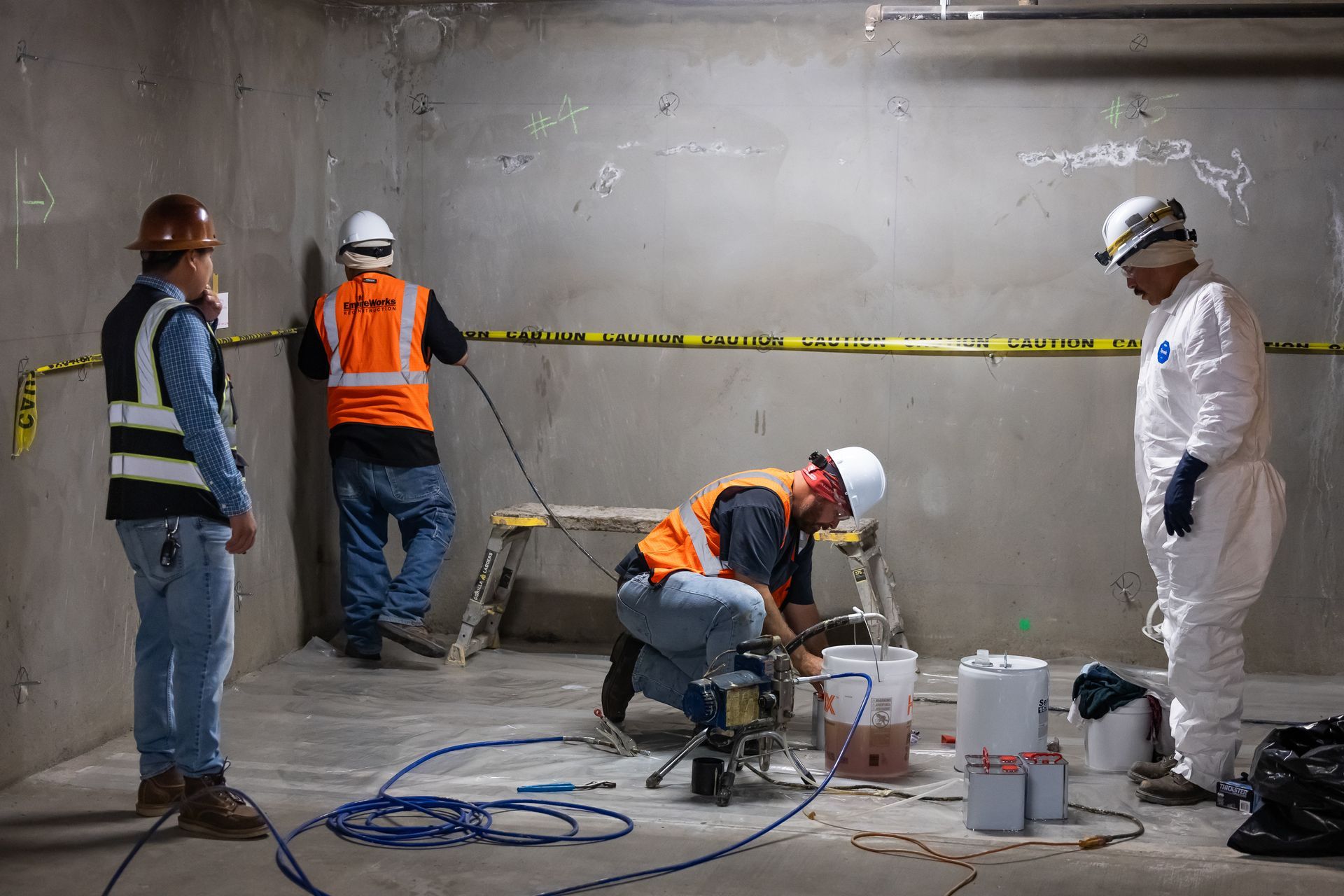
Phase 2 findings often involve spalling concrete, corroded reinforcing steel, balcony slab damage or failed waterproofing. A clear scope tied to the engineer's findings makes bids comparable. EmpireWorks handles structural repairs in Miami, concrete restoration and balcony repair for associations working through these findings.
Board checklist
- Confirm your building's certificate of occupancy date and whether your county uses the 25-year trigger
- Notify owners within 14 days of the local agency's notice
- Hire a Florida-licensed architect or engineer for Phase 1
- Get Phase 1 submitted within 180 days of the notice
- Distribute the summary within 45 days and post it on site and online if required
- If Phase 2 is required, get repair bids with conflict-of-interest disclosures
- Make sure repairs start within 365 days of the local agency receiving the Phase 2 report
- Coordinate the SIRS timing with the milestone inspection
This article is general information, not legal advice. Your board should confirm how these rules apply to your building with your association attorney and local building official.
Frequently Asked Questions
What are the Florida milestone inspection requirements?
Condo and co-op buildings three habitable stories or taller need a structural inspection by a licensed architect or engineer by December 31 of the year they turn 30, then every 10 years ( 553.899(3)). Your local building department can require the first one at 25 years based on local conditions. Phase 2 follows only if Phase 1 finds substantial structural deterioration.
Do townhouses need a milestone inspection in Florida?
The statute doesn't name townhouses. It excludes single-family through four-family dwellings with three or fewer habitable stories above ground ( 553.899(4)). Whether a townhouse building is covered depends on its stories and ownership form, so ask your attorney or building official.
Is the 3-mile coastal rule still in effect?
No. The original 2022 law required 25-year inspections for buildings within three miles of the coast. The 2023 amendments replaced that with a local option: your building department can require a 25-year inspection if local conditions, like proximity to salt water, call for it ( 553.899(3)(b)).
How long do we have to start repairs after a Phase 2 inspection?
Repairs must be started within 365 days after the local agency receives the Phase 2 report, under an ordinance each county or city is required to adopt ( 553.899(11)). Your local ordinance may set a tighter schedule, so check it.
Who can perform a milestone inspection?
An architect licensed under Chapter 481 or an engineer licensed under Chapter 471 who is authorized to practice in Florida. A team can do the work if one of them is in responsible charge ( 553.899(2)(a)).
Do we have to share the report with owners?
Yes. Within 45 days of receiving it, the association must send the inspector's summary to every unit owner and post it on the property. Associations required to have a website must also post the full report and summary there ( 553.899(9)).
If your inspection turns up repairs, EmpireWorks can review the engineer's findings and price the work so your board can meet its local deadline. Learn more about our Florida reconstruction services.
Sources
- Fla. Stat. 553.899 (2026), Mandatory structural inspections for condominium and cooperative buildings: https://www.flsenate.gov/Laws/Statutes/2026/553.899
- Fla. Stat. 718.112 (2026), Bylaws (SIRS, milestone duties, director liability): https://www.flsenate.gov/Laws/Statutes/2026/718.112
- Fla. Stat. 718.111 (2026), Official records and website posting: https://www.flsenate.gov/Laws/Statutes/2026/718.111
- CS/CS/SB 154 (2023): https://www.flsenate.gov/Session/Bill/2023/154
- CS/CS/CS/HB 1021 (2024): https://www.flsenate.gov/Session/Bill/2024/1021
- CS/CS/HB 913 (2025): https://www.flsenate.gov/Session/Bill/2025/913