HOA Budget Season: How to Get Real Numbers for Next Year's Exterior Projects
Most HOA managers know what the next 90 days will look like. In August, reserve studies come back into the conversation. September brings the HOA budget work session, where the board starts working on a draft. In October, owners get a copy to review. By November, the board votes, and that approved budget sets the financial plan for the community for the year ahead.
That timeline is why HOA budget season is really a pricing problem, not a spreadsheet problem. The math is easy. Knowing what the paint job, the balcony repairs, or the siding replacement will actually cost is the hard part, and it is the part most HOA budget planning quietly guesses at.
A number that comes in too low can create bigger problems later. The board approves the budget, the project gets a set amount, and then the actual bids come in months later. If the bids are higher than expected, the board may have to choose between a special assessment and putting the project off for another year. Here is how to avoid that.
Why The Number in Your HOA Budget is The Number You Live With
Once an HOA budget is adopted, the line item stops being an estimate and starts being a ceiling. Boards treat it that way, owners treat it that way, and by the time the actual proposals come in, the political cost of asking for more has gone up considerably.
The problem usually isn’t the math. It’s that the scope was never clearly defined. “Exterior painting” can mean very different things depending on what the project actually includes. Will there be pressure washing, wood repairs, stucco patching, railing prep, or extra coats on certain sides of the building? Each of those details can change the final cost. If the HOA relies on a per-unit estimate or an old invoice, those costs can easily be missed and show up later as change orders.
The best way to avoid that is to define the scope before the HOA budget is finalized, not after.
The Exterior Projects That Most Often Break an HOA Budget
In the HOA communities we work with, the same issues often come up and lead to unexpected costs.
Repainting that turned into repair
Crews open up a building to prep it and find dry rot, failed sealant, or substrate damage that was invisible from the ground. This is the single most common overrun in
HOA painting projects. It is also the most preventable, because a proper walk finds most of it before anyone signs anything.
Wood that has been quietly failing
Fascia, trim, stairs, and trellises degrade slowly and then all at once. Wood repair and replacement is nearly always cheaper to budget for as a known quantity than to absorb as a mid-project discovery.
Decks and balconies with Hidden Structural Issues
Elevated exterior elements carry both a cost risk and a liability risk. Deck and balcony repairs frequently reveal waterproofing failures underneath, which is why inspection findings and repair budgets should be developed together rather than in separate years.
Water intrusion nobody reported
Staining, efflorescence, and soft drywall at interior corners point back to the envelope. Waterproofing systems have a finite service life, and when they reach the end of it, the damage compounds behind finishes where no one sees it until it is expensive.
Stucco and masonry cracking
Hairline cracking is cosmetic. Stair-step cracking, bulging, and delamination are not. Getting stucco, EIFS, and masonry repairs scoped correctly is what separates a patch-and-paint budget from a substrate budget.
Roofs that are closer to the end than the reserve study assumes
A component's remaining useful life on paper and its condition on the roof are two different things. Roofing repairs and replacement are worth verifying in person before it goes into a funding plan.
Fencing, railings, gates, and site elements
Individually small, collectively meaningful. Fencing and railing replacement tends to get deferred until a safety issue forces it, at which point there is no HOA budget line waiting.
Plumbing behind the walls
For older HOA communities, repiping is the project most likely to arrive as an emergency rather than a plan.

What A Real HOA Budget Number Looks Like
There is a meaningful difference between three kinds of numbers, and HOA boards frequently do not know which one they are being handed.
A rule of thumb is a per-square-foot or per-unit figure applied to a community that may not resemble the one it came from. It is fine for a very early conversation and dangerous in an adopted HOA budget.
A reserve study allowance is a funding placeholder. An HOA reserve study is built to answer "are we contributing enough over thirty years," which is a different question from "what will this specific project cost next spring." Reserve studies are essential, and they are not bids.
A scoped budget estimate is produced by walking the property, documenting conditions with photographs, and pricing the work that is actually there. That is the number that survives contact with reality, and it is the only one of the three that belongs in an adopted HOA budget.
The reason this matters more this year than last: cost escalation has not gone away. The 2026 US construction cost outlook published by Tax Credit Advisor in January 2026 cited baseline total project cost escalation of 4 to 6 percent, with tariff-driven scenarios reaching 7 to 10 percent, and noted that construction input prices have risen more than 43 percent since early 2020. A number carried forward from a 2024 invoice is not a 2027 number
Your HOA Budget Season Walk: What To Look For
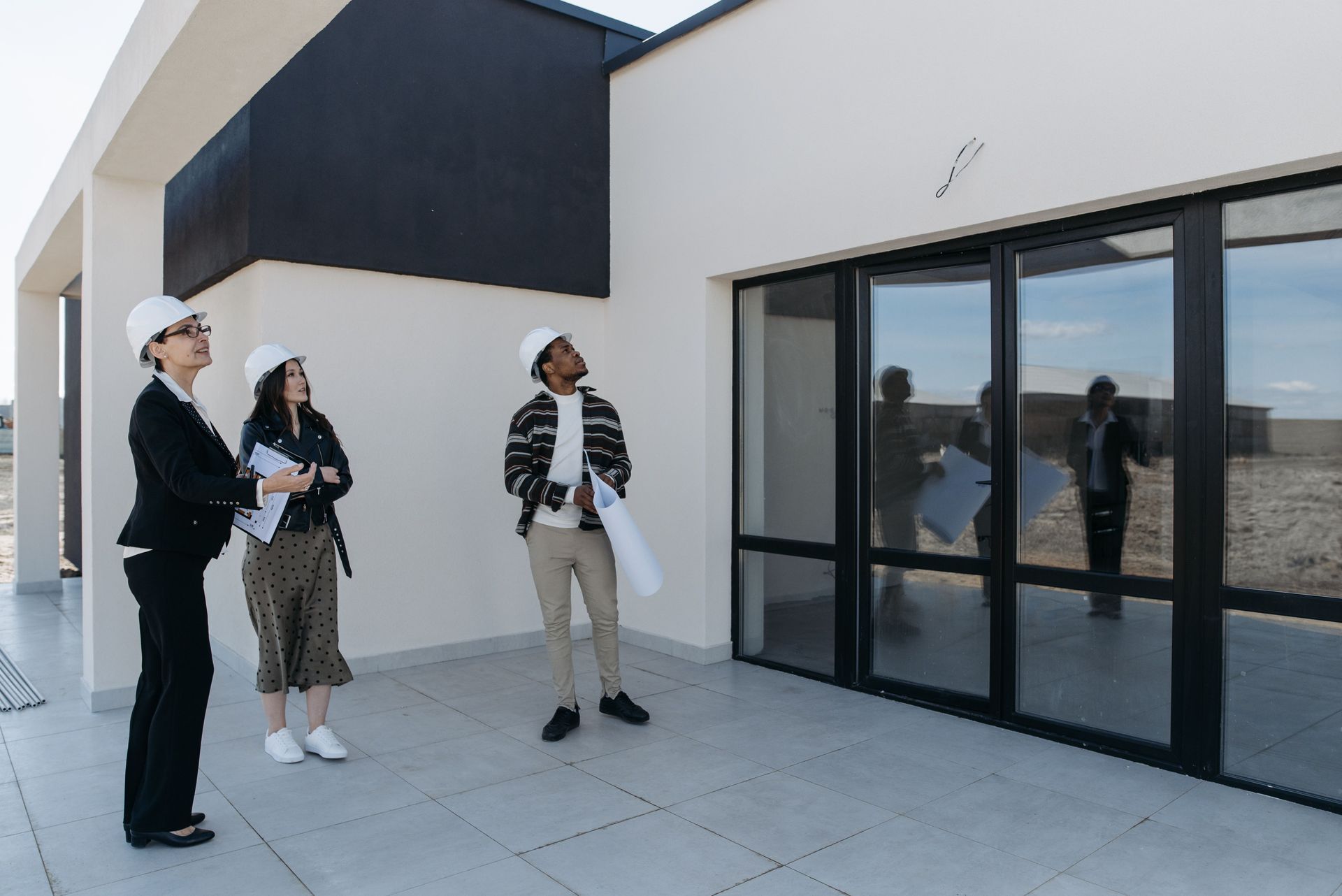
If you do one thing before your HOA budget work session, make it this. A structured walk of the community, with photographs, produces the scope that everything else depends on.
What to look for, building by building:
- Wood conditions at the ground and at the top. Deck posts, stair stringers, fascia, and trim ends. Probe anything that looks dark or soft.
- Balcony and walkway coatings. Cracking, blistering, ponding water, or exposed substrate.
- Railings and guardrails. Movement at the base connection is a safety finding, not a maintenance finding.
- Stucco cracks and where they run. Note direction and width. Diagonal cracking from window corners tells a different story than uniform hairlines.
- Delamination and drainage. Look at where water is supposed to go and confirm it actually goes there.
- Paint condition by elevation. South and west exposures fail first. Chalking, fading, and film failure on those faces while north elevations still look acceptable means you are budgeting a full repaint, not a touch-up cycle.
- Interior complaint history. Pull the last two years of maintenance requests and map them. Repeat water complaints in the same stack almost always trace to one envelope condition.
Where conditions suggest damage behind the finish, destructive and intrusive testing answers the question definitively rather than leaving the board to budget around a guess. The same applies to siding and structural repair, where visible symptoms rarely tell you the full extent.
This matters for HOA reserve study planning as well. When the Community Associations Institute revised its National Reserve Study Standards in 2023, one of the changes required reserve study providers to ask whether communities regularly maintain their components, because deferred maintenance shortens useful life and changes funding projections. Condition documentation is now part of the reserve conversation, not separate from it.
Sequencing Next Year's HOA Maintenance Projects
The order matters as much as the HOA budget itself. A few rules that save communities money and rework:
Repair before you coat
Wood repair, stucco patching, and sealant replacement all have to be complete before paint goes on. Budgeting the paint and not the prep guarantees a change order.
Test before you scope
If there is any suspicion of water intrusion or structural damage, testing belongs in the earlier phase so the repair scope is known before bids go out.
Waterproofing before it finishes
Deck coatings, balcony systems, and below-grade waterproofing are substrate work. They come first.
Group by elevation, not by trade
Phasing a community building by building or elevation by elevation reduces resident disruption, shortens the time scaffolding sits in place, and usually prices better than mobilizing multiple times.
Plan around your climate window
Coating and sealant products have temperature and humidity limits. In hot-summer markets that pushes exterior work toward spring and fall. In freeze-thaw markets it compresses the season further. Either way, the HOA communities that lock scope in the fall get first position on the spring calendar, and the ones that start bidding in March take what is left.
What To Hand Your HOA Board
Boards approve what they understand. An HOA budget package that gets approved without a fight usually contains four things:
- A condition summary with photographs. Not a narrative but images of the actual conditions, labeled by building.
- A defined scope for each project. What is included, what is excluded, and what the options are.
- A number tied to that scope. With the assumptions stated, a change in scope produces a visible change in price.
- A sequence and a reason. Why this project next year and that one the year after.
That package also makes bids comparable. When every contractor is pricing the same documented scope, the board is comparing prices instead of comparing guesses. Our scope of work creation and project management team builds exactly this kind of package, and on painting projects specifically we walk the property, create photo-driven scopes, and produce apples-to-apples bids so boards are not left reconciling three proposals that describe three different jobs.
Reserve and disclosure obligations vary considerably by state, and assuming your state works like the one next door is a common way to get caught short. Our write-up on Arizona reserve study requirements walks through one example, including the disclosure changes under HB 2397 that take effect September 12, 2026. Confirm what your own statute requires before the HOA budget closes.
Get Your 2027 HOA Budget Numbers Before the Vote
If a project is going in next year's HOA budget, the time to price it is now, with a trusted HOA contractor.
EmpireWorks has been doing exterior reconstruction for HOAs, condominiums, and apartment communities for more than 20 years, with over 10,000 completed projects and more than $1.5 billion in completed project value across six states. We are an EPA Lead-Safe Certified Firm, BBB accredited, and an Inc. 5000 company. HOA boards and community managers use our estimates to build budgets they can defend.
There is no cost and no obligation. We walk the property, document what we find, and give you a scoped number you can put in front of your board this fall. If the answer is that a project can safely wait a year, we will tell you that too.
Request an HOA budget estimate for your 2027 projects and we will get on your calendar before your budget work session.
Not sure which projects to prioritize? Start with a walk. Our team covers
condo exterior painting,
apartment community painting, waterproofing, wood and structural repair, decks and balconies, stucco, roofing, fencing, and full
reconstruction services across every HOA community we serve.
This is paragraph text. Click it or hit the Manage Text button to change the font, color, size, format, and more. To set up site-wide paragraph and title styles, go to Site Theme.