Nevada HOA Painting and Reserve Studies: What NRS 116 Requires Before Your Next Repaint
Repainting is one of the largest recurring capital expenses an HOA or condominium association will ever face, and in Nevada it is not just a maintenance decision. It is a regulated financial obligation. Nevada's Common-Interest Ownership Act, NRS Chapter 116, requires associations to plan, fund, and document major component work like exterior painting years before the first crew arrives on site. Boards and community managers in Las Vegas, Henderson, and Reno who treat painting as a discretionary line item often discover the compliance gap at the worst possible time: when the buildings are fading, the reserve account is short, and homeowners are facing a special assessment.
This guide breaks down exactly what Nevada law requires before your next community repaint, including the five year reserve study cycle, adequate reserve funding, the bid opening rules that govern how you select a contractor, and how to time the project itself. Use it as a working checklist for your next board meeting.
1. Exterior Painting Is a Reserve Component Under Nevada Law
Under NRS 116.3115, Nevada associations must establish adequate reserves, funded on a reasonable basis, for the repair, replacement, and restoration of the major components of the common elements. Exterior paint and coatings are a textbook major component. Paint protects stucco, wood trim, and siding from the exact conditions that destroy Nevada buildings: intense UV exposure, extreme temperature swings, and wind driven dust. When the coating fails, the substrate underneath starts failing too.
The practical consequence is that your association cannot legally treat repainting as an afterthought. The funding plan must be financially sound and must ensure sufficient money is available when the work becomes necessary. If your buildings need paint in 2028, the money needs to be sitting in a properly maintained reserve account in 2028, and reserve funds can only be spent on the components identified in your reserve study.
2. The Five Year Reserve Study Requirement (NRS 116.31152)
Nevada is widely considered one of the strictest reserve states in the country. NRS 116.31152 requires the executive board to commission a study of the reserves at least once every five years, conducted by a person who holds a permit as a reserve study specialist registered with the Nevada Real Estate Division. The board must also review the study annually and make any adjustments the board deems necessary to maintain adequate reserves.
The study itself is built on the observed condition, maintenance history, remaining useful life, and replacement cost of each major component, and exterior paint is evaluated like everything else. A reserve specialist walking your property in Las Vegas will assign your coatings a remaining useful life based on real conditions, not on what the budget would prefer. Associations also submit reserve study summary information to the Nevada Real Estate Division, which means your painting timeline is effectively on record with a state agency.
3. What an Underfunded Paint Cycle Costs Your Community
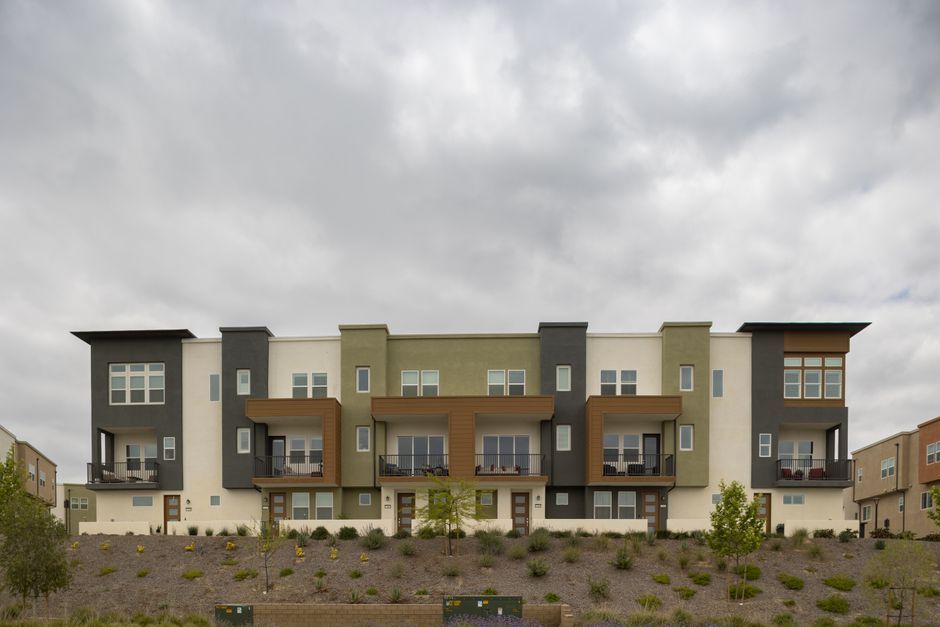
When a reserve study shows exterior paint past its useful life and the reserve account cannot cover the project, the association has limited options, and none of them are pleasant. The most common outcome is a special assessment, and Nevada gives homeowners real rights in that process, including the ability to demand a breakdown of costs. We covered how that process works in our guide to understanding special assessments for community repairs.
There is a second cost that surprises many boards: lending. Major lenders look at reserve adequacy when evaluating loans in common-interest communities, and a compliant reserve study can be used in place of standard replacement reserve requirements for project eligibility. An expired or inadequate study can restrict an owner's ability to finance or refinance a unit in your community. Deferred painting is rarely just a curb appeal problem. It shows up in your study, your funding plan, and ultimately in your homeowners' property values.
Deterioration compounds the math. Once coatings fail, water and UV reach the substrate, and a straightforward repaint becomes a repaint plus stucco repair, wood replacement, and sealant work. If you are seeing chalking, fading, or hairline cracking now, review the warning signs in 3 Signs It's Time to Repaint Your HOA and get the project into your funding plan before the scope grows.
4. Running a Compliant Bid Process
Nevada also regulates how associations solicit and open bids for association projects. Under NRS 116.31086, when an association solicits bids for a project, the bids must be opened and read during a meeting of the executive board. This is a transparency requirement that protects the board as much as the homeowners. A documented, open bid process is your best defense when an owner questions why a particular painting contractor was selected.
To make that process meaningful, every bidder should be pricing the same scope: the same surface preparation standards, the same products and number of coats, the same repair allowances for stucco and wood, and the same warranty terms. A spread of bids built on different scopes tells the board nothing. EmpireWorks provides detailed scope documentation with every exterior painting proposal specifically so boards can compare bids line by line and document the decision properly.
5. Planning a Compliant Repaint in Las Vegas, Henderson, and Reno
Once funding and bidding are squared away, timing matters more in Nevada than in almost any other market. Desert UV and surface temperatures shorten coating life and constrain the application calendar. Extreme summer heat can push wall surface temperatures far beyond manufacturer application limits, which is one reason cooler months are often ideal for Southern Nevada communities. We broke down the scheduling logic in 5 Reasons Why It's Better to Paint Your Community in Winter in the Desert.
Your reserve study assumptions should also reflect desert reality. A paint cycle that lasts ten years in a coastal market may need a shorter cycle in the Las Vegas Valley, and the products you select, such as elastomeric coatings and high build acrylics, directly affect the useful life your reserve specialist can assign. Choosing the right system is a reserve strategy decision, not just an aesthetic one. Our team covers product selection in How to Choose the Right Paint for HOA Properties.
Conclusion
Nevada law turns community repainting into a multi year compliance process: fund it under NRS 116.3115, document it through the five year reserve study cycle of NRS 116.31152, bid it transparently under NRS 116.31086, and execute it with a properly licensed contractor at the right time of year. Boards that follow that sequence protect their buildings, their reserve accounts, and themselves.
EmpireWorks has completed more than 9,000 projects for HOAs, condominium associations, and commercial properties, and our Nevada division works with boards and community managers across the state, including dedicated exterior painting and coating services in Las Vegas. If your reserve study shows painting on the horizon, contact us for a detailed proposal your board can take straight into the bid process.
Sources
This article is provided for general informational purposes and is not legal advice. Consult your association's legal counsel regarding your community's specific obligations under NRS 116.